




2025-04-18


2025-04-18

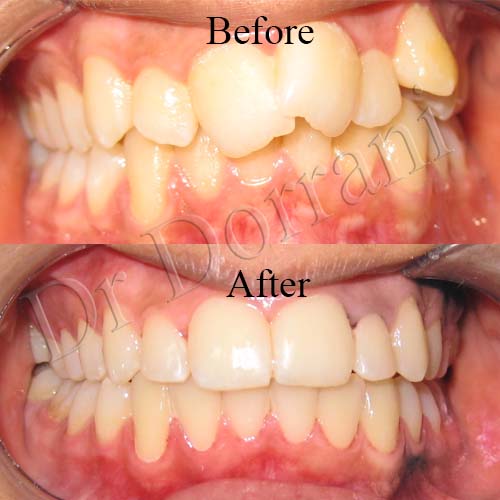
2025-04-18
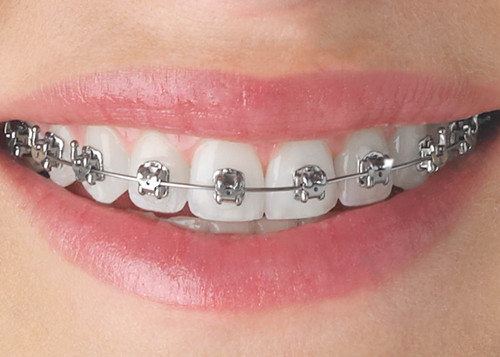
Fixed Orthodontics
A constant orthodontic is called constant, which is directly attached to the teeth by dental materials, and the patient can not remove it from his or her mouth and can only be detached by an orthodontist. This is the only standard method in the world that uses metal brackets on the tooth surface. A constant orthodontist consists of components called brackets, oering and elastic (orthodontic cuffs) and orthodontic wires.
Brackets stick to jeans on teeth and stays up to the end of the treatment on the teeth (metal brackets are the best type of brackets that do not break down and wear the teeth and minimize damage to the tooth enamel). ) And a wire passes through the brackets connected to the brackets with colored orthodontic cords. These orings are replaced in each session depending on the movement of the tooth, but the wire may not be replaced at any session. This device has a high ability to create different dental movements in different directions, and the force that enters the teeth is controlled by force and gradually leads to tooth to be ordered and ideally, and in addition to moving the teeth, the root of the tooth Also moves. Also, the duration of fixed orthodontic treatment will be shorter than other orthodontic procedures.
In the treatment of fixed orthodontics, the teeth move slowly and continuously, and the teeth can be moved one millimeter per month. In case of breakage of the braces, the patient should take emergency care and go to the office sooner than the prescribed time. In a fixed orthodontist after placing the braces on the teeth, the patient should visit the orthodontist once a month to perform dental procedures by adjusting and activating the wire and the orings or springs. At this time, the patient may have some pain that decreases over time in the first week. Between the examination sessions, due to the gradual displacement of the teeth, some of the orthodontic ends of the orthodontic tooth can be drawn out of the patient’s last teeth, causing a feeling of tightness in the area, in which case the patient should refer to the office to cut the end of the wire.
The treatment of unformed teeth with fixed orthodontic treatment is unlimited in age and is not restricted to children and adolescents. The only condition is the gum health and the tissues that hold the teeth. Therefore, not only the adult orthodontics but also pediatric orthodontics are the most important condition for having a good health. Fixed orthodontics are able to move them in the direction of the arch of the jaw by applying force to the teeth, correcting the abnormal rotation of the teeth, and if necessary, to inject a tooth in the jaw or tooth extraction from the jaw. One of the advantages of using fixed orthodontic to stick outside of the teeth is not to interfere with the patient’s speech.
A constant orthodontic is done by an orthodontist, and this discipline is not taught in general dentistry (dentistry surgeon) due to the complexity and high workmanship, the best treatment plan and the length of the treatment period, and only the orthodontist after 3 Or 4 years after the general dentistry is able to do so.


Rate this article